Do I Wail or Whine About Empty Nest Syndrome?

Something About Nothing by Julie Seedorf published the week of June 16, 2014 in http://www.albertleatribune.com and the Courier Sentinel

Whining and wailing were the words that were the topic of a discussion recently on a Facebook page of writers. We were all listing our pet peeves about writing and the words that are over used in books.

For instance, I have a habit of writing the way I talk. I say “so” and “that” often and other words I use that do not contribute to the story and bog it down with extra words. Thank goodness for editors that — I mean, who — occasionally take me to task for adding those words.

This day the discussion centered around books where people used the word “wailed,” which means to make a mournful cry or a high-pitched noise. The other word in the discussion was whining, used in books to describe a character or what the character is saying. There are characters that whine through the entire book.

As I was taking part in this discussion I realized I have been whining quite a bit lately. I have been whining about wanting to move closer to my children who are the parents of my grandchildren. I have been whining about being closer to a coffeehouse so I do not have to drive 20 miles to have my latte and pull out my computer to write. There is something about coffeehouses that sparks the creativity in me.

I have thought that my whining was actually about living in a bigger city. After spending a busy weekend with my family, and in a bigger community, I realized that perhaps my whining was more about still suffering from empty-nest syndrome. That realization was a surprise to me since I haven’t had any children in that nest for at least 15 years.

I have settled into a routine: Watch my own television programs, hibernate in the winter and do the normal everyday things. What I have come to realize is that if I don’t have frequent contact with people younger than me, I get more set in my ways and I feel older. If I don’t physically engage in conversation with young minds, my world doesn’t expand as much. There is so much to be learned from the youth of today.

It seems that if there are no young people in my home, it is easier to not take part in the youth activities in my community. If I don’t have a connection with a young person, then even though I may go to those activities, I am still a bystander. Where there is no encouragement to take part it is easier to settle into a shuttered life.

Visiting the city I also recognize the opportunities there are for older people. You can get lost in a big city, too, but there are also senior community groups such as the one at the Chaska Community Center that are active daily, have weekly activities and trips long and short each week.

The seniors have their own part of the building and daily there is something happening for older adults to get out and socialize with others of their age and also with the younger people in and about the community center.

I like being part of a small close-knit community where neighbors help neighbors. That is the richness of living in a small town. If I walk out my door I can guarantee that no matter where I go in my community I will meet someone I know. I like the quietness of a small town and I can wallow in that quietness, perhaps too much.

So I have been whining, caught between the richness of my community, and a place where I have lived most of my life, and wanting to expand my world to try the big city and all it offers.

Family is a big part of that exploring the big city feeling for me. It is about empty-nest syndrome and missing watching my children’s plays and basketball games. I am missing the daily rush to get done with supper and get the kids where they need to be for their schedules. It is missing what I learned each day from my children. It is missing the cute stuff they say and the laughter of having a family in the house.

Those of us who have children have all went through it. I can’t imagine I am the only mom who is the age I am and still missing the daily grind with kids. Perhaps it is about remembering my youth and the family that I was surrounded by, aunts, uncles, cousins and missing that connection, too.

Do I wallow and whine and wail or do I accept where I am placed? Do I, or I should say we, the other half of the empty-nest syndrome person, spread our wings and move closer to our kids and grandkids so we can enjoy the hustle and bustle of their sports, their music, their young lives?

I have to think, like the dialogue in a book, that my whining and wailing is getting repetitive. Is it time to edit the dialogue of my life?

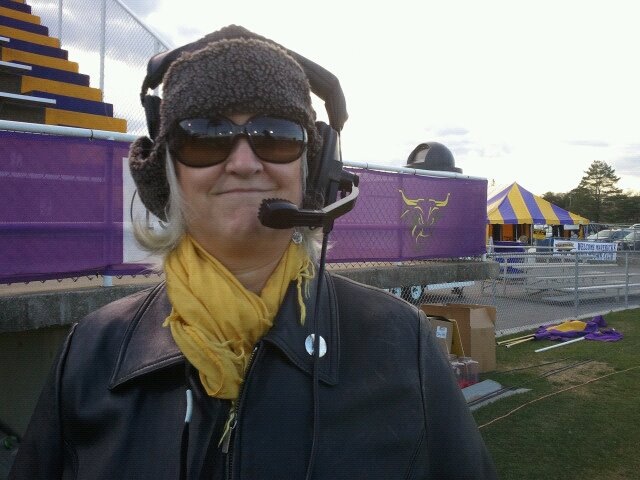
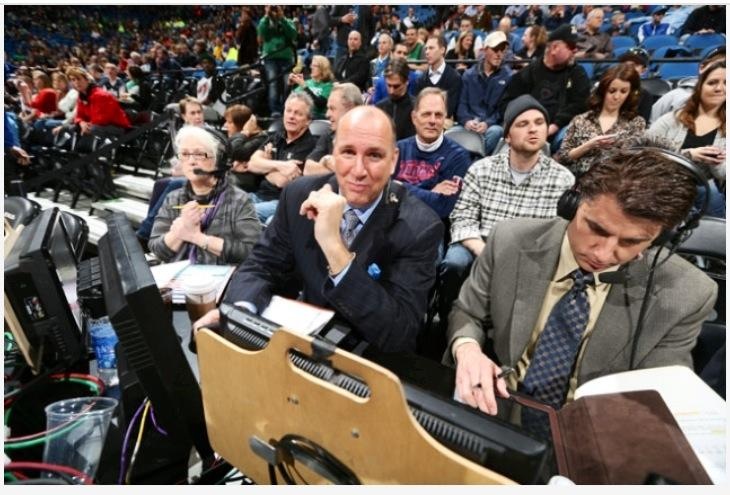
What You Don’t See During a Television Sports Broadcast.

imageWe live in an ever expanding world because of technology. Occasionally it is good for all generations to reach out of our rural area and look beyond what is offered in small communities for jobs and to make connections with people whose experiences are much different than ours in the rural community. Doing this occasionally offers us insight, energizes us and gives us new understanding of what is available for the younger generation leaving the rural area.

Watching sports on television is a pastime for many people on a daily basis. It is easy to sit back in our recliners and cheer on our favorite teams. We see and hear the announcers, we watch and listen to the players without a second thought as to what it takes to produce a live game. Many people behind the scenes work hard day in and day out to see that our viewing pleasure is not disrupted by glitches. Timya Owen is one of those people.

Timya Owen, lives in St. Paul, Minnesota and works as a stage manager for broadcast sports productions. This is how Owen describes her job, “My job is to facilitate communications between the producer and the broadcast booth or studio. We make sure everything is in place for the broadcast, keep the talent informed and supply them copy to read as needed. We are often called upon to run camera, adjust lighting, troubleshoot audio issues, etc. We also wrangle players for interviews and guests who might be scheduled on the set. “
Owen has been working in this field for approximately 15 years. She was working at the local PBS station in St. Paul when Minnesota got the NHL Franchise (the Minnesota Wild) and there was a need for crew to cover coinciding broadcasts. Because Owen loved sports, someone suggested she apply when there was an opening. “It was a natural fit and I’ve been doing it ever since.”
Owen is an independent contractor. There are several crewers in the area who have lists of names that call when an event requires a broadcast crew. I also get direct calls from ESPN, Big Ten Network, CBS, NBC, etc. when they need someone. Once you’re on the list, you just have to wait for the calls.”

Television viewers see a little of what goes on behind the scenes to get a game on the air. Owen expanded on that during her interview. “Viewers would be amazed at what goes into a broadcast. Some are fairly simple, but there are events that require multiple trucks and dozens of crew, several days to set up cameras and audio. In the trucks, you have producers, directors, audio guys, video tape replay guys … they are the unsung heroes. Those replays and roll-outs of highlights, all done on the fly while trying to capture a game that is still happening. I’m amazed by them. Out in the arena or stadium, there are camera guys, utilities, more audio people, sometimes makeup artists, talent, statisticians, and of course, the stage managers. Multiply it by two, because usually there’s a full crew for home and visiting teams. Add another crew if the event is also being broadcast nationally (ESPN or any national broadcaster). I haven’t even started on the in-house crew which puts the show and the crowd on the jumbotron for the folks in the stands.”
Owens hours vary from weekends to evenings. When asked about glitches that the viewer’s sometimes see or don’t see, she laughs, “Hah! Most glitches you will see or hear at home. But things only we know about….talent taking a tad too long in the restroom during a commercial break, monitors failing so that talent are describing a replay they can’t actually see, guests not showing up for interviews. I have one announcer who gets goosed by a player at every game. No names…. Lol.
Timya Owen grew up as an Air Force brat and lived all over the world, Florida, Morocco, California, Texas, Cape Cod and ended up in Minnesota. Besides her love of sports, Owen is also a writer and interested in Native American History.

She is currently working on a Cozy Mystery Series called The Fernbridge Mysteries. The mysteries take place in the Victorian Village of Ferndale in Northern California. “At this point, I’m leaning towards self-publishing, but I would love to have Cozy Cat Press accept my cozy mystery.”
When asked about her interest in Native American History she explained what sparked that interest, “I’ve been interested in native rights since the 80’s. I was active with the American Indian Movement for years through their AIM Patrol. We would patrol troubled neighborhoods in South Minneapolis in the evenings, provide security for community events, etc. I met my husband (who is Dakota from a small reservation near Red Wing) at a traditional pow wow when his dad invited us into their home for a meal. We half joke that his dad knew we were meant to be together.”
Owen offers a little advice to younger people thinking about getting into the technical part of the sports broadcast business.
“It’s really just common sense and intuition. You have to stay focused and listen to constant chatter on headsets while trying to keep your talent happy and informed. Being a people person helps, but you need to know when to back off. Every broadcast team is different. Some guys can joke around right up until air time and others need to be left alone to study game notes and player profiles. Don’t be affected by celebrity. That’s a tough one for me because I have many sports heroes.”
“Be willing to start at the bottom. Take whatever work you can get and work hard. You’ll be noticed and recommended for future jobs because the crew will know you can be counted on. Watch, listen, ask questions and be the first to admit if you don’t know how to do something. Our guys are great and they’re more than happy to share their knowledge.”
Think of Timya Owen the next time you turn on your television or computer and watch network sports. Imagine all that is going on in the background to bring you the best for your viewing pleasure. Sit back in your chair, root for your team and know that the production crew has got it covered.

timberwolves game timya timya1

Roy Rogers Rules, Out of Date or Still In Style?

royrSomething About Nothing by Julie Seedorf – Albert Lea Tribune, June 9, 2014

“Happy trails to you, until we meet again.” Those were the words Roy Rogers and Dale Evans signed off with every week on their TV show, “The Roy Rogers Show.”

I was a young girl when Roy Rogers was on television. I was 5 or 6 when my family started watching “The Roy Rogers Show.” At that time there was one television in the house and it was black and white.

Children watched what their parents watched. Most of the time the shows were pretty mild; it wasn’t like it is today because there were television censors so kids could pretty much watch what their parents watched.

In 1961 reruns of “Roy Rogers” were broadcast on Saturday morning. I loved Roy Rogers. He was so cute as an older man to have a crush on. My cousin Rose also loved Roy Rogers, and Rose and I, along with cousins and friends, would play out in the grove and pretend we were the cowboys and Indians. It was what we did in those days; we used our imagination to have fun.

Every time I think of Roy Rogers or see Roy on television in old reruns, I think of my cousin and the fun we had.

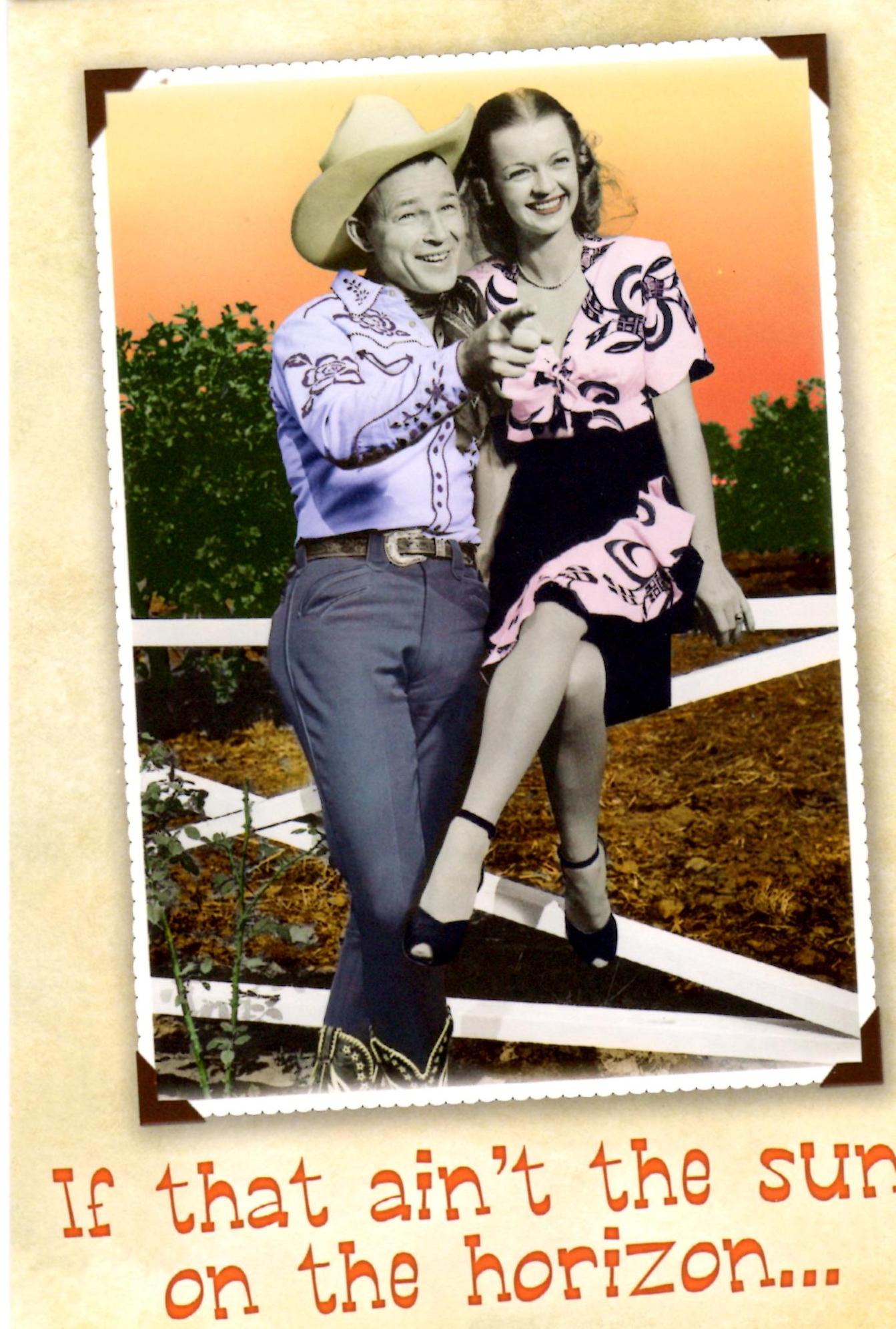
This week I celebrated another one of those birthdays. Imagine my surprise when I received a card with a picture of Roy Rogers on the envelope. I didn’t have to look at the return address to know who had sent the card. It brought a big smile to my face.

The card also had a picture of Rogers and his wife, Dale Evans, on the front, and it was signed by my cousin, “from my boyfriend, Roy and me.” It gave me a big chuckle for my day.

On the back of the card were the Roy Rogers Rider Rules. I thought I would share them with you.

1. Be neat and clean.

2. Be courteous and polite.

3. Always obey your parents.

4. Protect the weak and help them.

5. Be brave, but never take chances.

6. Study hard and learn all you can.

7. Be kind to animals and take care of them.

8. Eat all your food and never waste any.

9. Love God, and go to Sunday School regularly.

10. Always respect our flag and our country.

These rules were part of the Roy Rogers Riders Club, started in the 1940s. Any child could join by sending in his or her name and address. A Rogersgram, which looked like an official telegram, was sent  and it arrived by Trigger Express.

Trigger, for those who don’t remember the show, was Roy’s horse. I still have my card somewhere in my memory boxes.

We took these rules seriously. Our parents liked these rules because they mimicked what they told their children. Looking at these rules some 74 years later, I believe Roy’s rules should be rules everyone abides by in 2014.

Taking care of you, treating others with respect, being kind to God’s creatures and paying attention to how we live in our world by not wasting are great standards to live by.

The ones to me that the most important are: Love God, and always respect our flag and our country.

Respect doesn’t mean blindly following. Respect doesn’t mean agreement when your heart tells you to disagree on an issue. The definition of respect in the dictionary is a deep admiration for someone or something elicited by their abilities, qualities and achievements.

I have been thinking long and hard about respect  this the past week as I followed a conversation by a friend on Facebook on harassment of women in public places, such as convenience stores and fast food places, by roaming lotharios. The argument got heated when a couple of men joined in the conversation and said both sexes had problems with that.

As I read Roy Rogers Rider Rules I thought about this conversation. I have never liked “The Honeymooners” that used to be on television in the ’50s.

I did not like the comedy in the way Ralph treated Alice. Even as a child I did not like it. I did not see the humor in the disrespectful way he treated her although at my young age I didn’t realize what my dislike was for.

Fast forward to today’s comedies on television and you see someone getting sexually harassed or disrespected every day. Why is it that it is accepted behavior on television and not accepted behavior in real life? Is it any wonder those that are leering when my friend visits public places, get the idea that leering at women or even men is acceptable?

We don’t seem to have that deep respect anymore for each other and for our country. Maybe it all boils down to one thing and that is respect for one self. Our behavior, what we do and what we say, reflects our own self-respect.

If we don’t respect ourselves how can we expect respect from other people? Perhaps those that leer, berate public officials or the person in the car next to us shaking their fist, have less respect for themselves and their behavior, than the person they are directing their behavior at. If we don’t know how to respect ourselves, how can we show respect for others and how can we show respect for our country?

Deep thoughts for an old birthday gal, but that is what age is all about, wandering pondering.

Rogers believed in teaching respect. I believe Rogers had respect for himself and that is why he could show respect to others. I believe Rogers knew respect begins at home with ourselves and that is why he created Roy Rogers Rider Rules