
 We live in an ever expanding world because of technology. Occasionally it is good for all generations to reach out of our rural area and look beyond what is offered in small communities for jobs and to make connections with people whose experiences are much different than ours in the rural community. Doing this occasionally offers us insight, energizes us and gives us new understanding of what is available for the younger generation leaving the rural area.
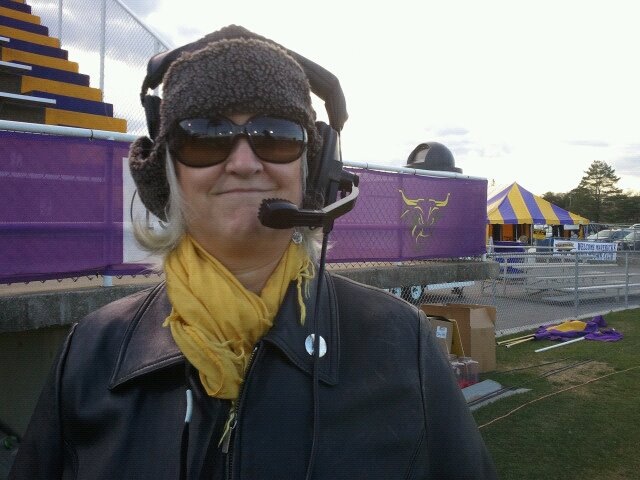
Watching sports on television is a pastime for many people on a daily basis. It is easy to sit back in our recliners and cheer on our favorite teams. We see and hear the announcers, we watch and listen to the players without a second thought as to what it takes to produce a live game. Many people behind the scenes work hard day in and day out to see that our viewing pleasure is not disrupted by glitches. Timya Owen is one of those people.
Timya Owen, lives in St. Paul, Minnesota and works as a stage manager for broadcast sports productions. This is how Owen describes her job, “My job is to facilitate communications between the producer and the broadcast booth or studio. We make sure everything is in place for the broadcast, keep the talent informed and supply them copy to read as needed. We are often called upon to run camera, adjust lighting, troubleshoot audio issues, etc. We also wrangle players for interviews and guests who might be scheduled on the set. “
Owen has been working in this field for approximately 15 years. She was working at the local PBS station in St. Paul when Minnesota got the NHL Franchise (the Minnesota Wild) and there was a need for crew to cover coinciding broadcasts. Because Owen loved sports, someone suggested she apply when there was an opening. “It was a natural fit and I’ve been doing it ever since.”
Owen is an independent contractor. There are several crewers in the area who have lists of names that call when an event requires a broadcast crew. I also get direct calls from ESPN, Big Ten Network, CBS, NBC, etc. when they need someone. Once you’re on the list, you just have to wait for the calls.”
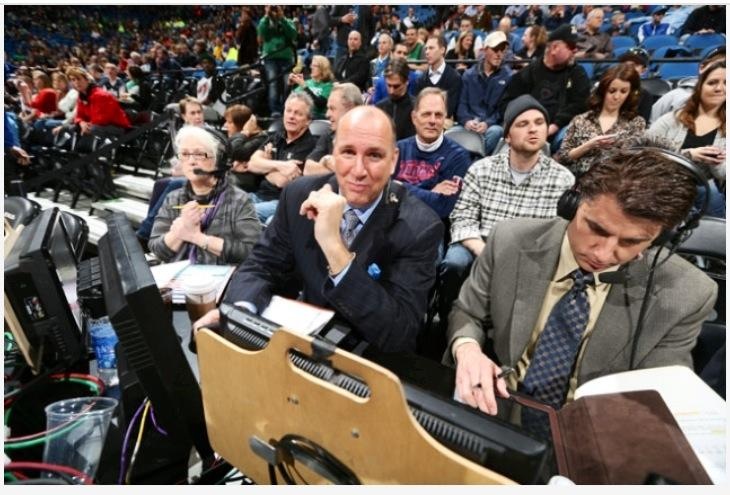
Television viewers see a little of what goes on behind the scenes to get a game on the air. Owen expanded on that during her interview. “Viewers would be amazed at what goes into a broadcast. Some are fairly simple, but there are events that require multiple trucks and dozens of crew, several days to set up cameras and audio. In the trucks, you have producers, directors, audio guys, video tape replay guys … they are the unsung heroes. Those replays and roll-outs of highlights, all done on the fly while trying to capture a game that is still happening. I’m amazed by them. Out in the arena or stadium, there are camera guys, utilities, more audio people, sometimes makeup artists, talent, statisticians, and of course, the stage managers. Multiply it by two, because usually there’s a full crew for home and visiting teams. Add another crew if the event is also being broadcast nationally (ESPN or any national broadcaster). I haven’t even started on the in-house crew which puts the show and the crowd on the jumbotron for the folks in the stands.”
Owens hours vary from weekends to evenings. When asked about glitches that the viewer’s sometimes see or don’t see, she laughs, “Hah! Most glitches you will see or hear at home. But things only we know about….talent taking a tad too long in the restroom during a commercial break, monitors failing so that talent are describing a replay they can’t actually see, guests not showing up for interviews. I have one announcer who gets goosed by a player at every game. No names…. Lol.
Timya Owen grew up as an Air Force brat and lived all over the world, Florida, Morocco, California, Texas, Cape Cod and ended up in Minnesota. Besides her love of sports, Owen is also a writer and interested in Native American History.
She is currently working on a Cozy Mystery Series called The Fernbridge Mysteries. The mysteries take place in the Victorian Village of Ferndale in Northern California. “At this point, I’m leaning towards self-publishing, but I would love to have Cozy Cat Press accept my cozy mystery.”
When asked about her interest in Native American History she explained what sparked that interest, “I’ve been interested in native rights since the 80’s. I was active with the American Indian Movement for years through their AIM Patrol. We would patrol troubled neighborhoods in South Minneapolis in the evenings, provide security for community events, etc. I met my husband (who is Dakota from a small reservation near Red Wing) at a traditional pow wow when his dad invited us into their home for a meal. We half joke that his dad knew we were meant to be together.”
Owen offers a little advice to younger people thinking about getting into the technical part of the sports broadcast business.
“It’s really just common sense and intuition. You have to stay focused and listen to constant chatter on headsets while trying to keep your talent happy and informed. Being a people person helps, but you need to know when to back off. Every broadcast team is different. Some guys can joke around right up until air time and others need to be left alone to study game notes and player profiles. Don’t be affected by celebrity. That’s a tough one for me because I have many sports heroes.”
“Be willing to start at the bottom. Take whatever work you can get and work hard. You’ll be noticed and recommended for future jobs because the crew will know you can be counted on. Watch, listen, ask questions and be the first to admit if you don’t know how to do something. Our guys are great and they’re more than happy to share their knowledge.”
Think of Timya Owen the next time you turn on your television or computer and watch network sports. Imagine all that is going on in the background to bring you the best for your viewing pleasure. Sit back in your chair, root for your team and know that the production crew has got it covered.




 Sprinkled Notes